

The First Print Failed. Now I Have to Figure Out What Zamora Is Actually Worth.

Sometimes the hardest part of publishing a comic isn't making the book. It's making sure the book survives the business.

"You can spend years creating a world, but the market only gives you a few seconds to decide whether it's worth bringing home."
Introduction: Setting the Stage
This has probably been the most stressful week of preparing Zamora Volume 1.
And that's saying something.
For months, I've been worrying about finishing pages, preparing the Lorebook, finding suppliers, designing merchandise, planning the booth, applying for an ISBN, and figuring out how to get everything printed before Cagayanime.
I thought I was finally past the hardest part.
Then the first print arrived.
And it was wrong.
Not slightly wrong.
Very wrong.
The approved sample copy looked great. The colors and lighting were where I wanted them.
But when the 29 remaining copies came out of the printer, the entire book was much darker.
So dark that some of the artwork was difficult to see.
What happened?
The printer's original machine, the one used to produce my approved sample, was damaged and couldn't be repaired in time.
So they moved the production run to another machine.
The problem?
Nobody told me.
If I had known weeks earlier, I could have adjusted the artwork specifically for that printer.
Instead, I found out after the books were already produced.
And suddenly, all those months of work came down to one terrifying question:
Can I fix this before the convention?

Then came another problem.
The Lorebook was missing two pages.
That's actually my fault.
Saddle-stitch binding requires the total page count to be divisible by four.
I knew that.
And somehow, in the middle of everything else, I still managed to miss it.
So now I'm relaying out the Lorebook.
Again.
And while doing that, I'm also converting Volume 1 properly to CMYK, relighting all 100 pages, checking the files, sending them back to the printer, and hoping that this time...
the books come out the way they're supposed to.
Sleep?
What's that?
This is the glamorous side of independent publishing nobody puts on the Instagram post.
The Deep Dive: The Book Is Finished. The Business Isn't.
This experience reminded me of something I keep learning over and over again:
Finishing the artwork doesn't mean you're finished.
Sometimes, that's when the real work starts.
As an artist, I spent years learning how to draw.
Then I had to learn storytelling.
Then lettering.
Then coloring.
Then production.
Now I'm learning manufacturing, pricing, inventory, logistics, marketing, and customer psychology.
Apparently, making comics wasn't enough.
I also had to become a tiny publishing company.
And now I'm learning another uncomfortable lesson:
A product can be beautifully made and still be priced badly.
That's where pricing becomes interesting.
Because the question isn't simply:
"How much did this comic cost me to print?"
The better question is:
"What price makes sense for the product, the audience, and the future of the project?"
Those are three very different things.
If I price Zamora too low, I might sell more copies but make it impossible to fund the next volume.
If I price it too high, I might protect my margin but make it difficult for a new reader to take that first step into the world.
And I'm not selling Zamora at a giant Manila convention with thousands of established publishers and international brands.
I'm bringing it to my home market.
Cagayan de Oro.
That changes the equation.
The CDO Convention Pricing Principle
I've started thinking about my pricing in a much simpler way:
Don't price for the customer you wish you had. Price for the customer standing in front of you.
That's especially important for independent artists working outside Metro Manila.
There are students.
Young professionals.
Parents.
Collectors.
Fellow artists.
People who love comics but only have a few hundred pesos to spend.
And then some collectors are perfectly willing to spend more for something special.
They don't all have the same budget.
They don't all value the same thing.
So why would I give them only one way to support Zamora?
This is where pricing psychology becomes useful.
Not as some manipulative trick.
But as a way of making the buying decision easier.
Research on psychological pricing shows that just-below pricing can influence perceived affordability in certain contexts, particularly when the leftmost digit changes, for example, ₱99 versus ₱100. But the effect isn't universal, so presentation, product category, and buying context still matter.
That distinction matters.
Because I'm not trying to trick anyone into buying something.
I'm trying to make it easier for someone to say:
"Yeah. I can afford that."
1. Give People a Low-Risk Way Into Your World
This is where stickers become important.
A person might not be ready to spend several hundred pesos on a graphic novel from an artist they've never heard of.
But they might happily buy a sticker.
That's not a failure.
That's an entry point.
A ₱50–₱100 purchase can introduce someone to the character.
Then maybe they follow the page.
Then they see the Lorebook.
Then they come back at the next convention.
Eventually, they might buy Volume 1.
I've started thinking about this as a ladder:
Sticker → Sketch Card → Lorebook → Graphic Novel → Future Volumes
The goal isn't to force everyone to jump straight to the top.
The goal is to give people somewhere to start.
2. Use Charm Pricing Where It Makes Sense
For lower-cost impulse products, prices such as ₱49, ₱99, or ₱149 can make sense.
The reason is psychological.
When a price changes from one leftmost digit to another, say, from ₱99 to ₱100, the difference can feel larger than the actual ₱1 suggests. Research has found evidence for this left-digit effect, although newer research also shows that it depends heavily on context.
So I might use:
Sticker — ₱49
Sticker Pack — ₱99
Sketch Card — ₱149
Instead of automatically rounding everything.
But I wouldn't use this everywhere.
Because there's another side to pricing.
3. Sometimes a Round Number Looks More Valuable
Imagine two products:
Limited Zamora Sketchbook — ₱749
versus
Limited Zamora Sketchbook — ₱750
The first feels like a deal.
The second can feel more deliberate.
More premium.
That's where clean, rounded pricing can work better for higher-value products.
Psychological pricing isn't simply about making everything cheaper.
It's about communicating what kind of product you're selling.
For premium or collectible products, a clean number can make the purchase feel more intentional.
So instead of trying to make every product look like a bargain...
let the product tell the buyer how it should be perceived.
4. Create an Anchor
Here's another thing I'm experimenting with.
If the graphic novel is the biggest purchase on the table, it naturally becomes an anchor.
Suddenly the smaller products feel different.
A ₱700+ graphic novel feels like a significant commitment.
A ₱150 sketch card feels much easier.
A ₱99 sticker pack feels almost effortless by comparison.
The higher-priced item establishes the reference point.
Anchoring works because people often evaluate a price relative to another price they have already seen.
But there's an important rule:
Don't create fake prices just to manipulate people.
The anchor has to represent a legitimate product.
For me, that means letting the graphic novel be the premium centerpiece while giving people smaller ways to participate.
5. Bundle the Small Stuff
This is probably one of the easiest things an independent artist can experiment with.
Instead of:
Sticker — ₱49
Postcard — ₱50
Print — ₱100
Create something like:
Zamora Starter Pack — ₱199
Maybe it contains:
3 stickers + 1 mini print + 1 postcard.
Suddenly, the buyer isn't thinking about the individual prices anymore.
They're thinking:
"I'm getting a whole Zamora package for ₱199."
Bundling changes how people evaluate value because they're comparing the package against the individual items and the overall experience. Psychological pricing research identifies bundling and reference points as useful ways of shaping choice.
And for an IP like Zamora, that's even more useful.
You're not just selling objects.
You're selling a small piece of the universe.
Emotion Commits the Crime. Logic Does the Cover-Up.
Here's the uneasy part.
When I think about pricing Zamora, I can pretend I'm doing pure mathematics.
Printing costs.
Booth costs.
Packaging.
Transportation.
Production.
Marketing.
Margin.
ROI.
But underneath all of that is emotion.
Fear.
What if people think it's too expensive?
What if they compare it to another comic?
What if nobody buys it?
What if I price it fairly and still lose money?
And the biggest one:
What if people don't think my work is worth what it cost me to make?
That's the real question.
Because pricing your own art isn't just accounting.
It's personal.
You are putting a number on something you spent years creating.
And sometimes that number feels like a judgment of you.
But I had to separate those two things.
The price of the product is not the value of me as an artist.
It's a business decision.
And business decisions can be tested, measured, and changed.
The Solution: Build a Price Ladder, Not a Single Price
This is the biggest lesson I'm taking into Cagayanime.
I don't need everyone to buy the graphic novel.
I need everyone to have a reason to stop.
That's a different objective.
So I'm thinking about the booth as a price ladder:
The "I Just Like It" Buyer
Sticker.
Small commitment.
Easy yes.
The "I'm Curious" Buyer
Sketch card or Lorebook.
They're starting to explore the world.
The "I'm a Fan" Buyer
Graphic novel.
They're ready to commit.
The "I Want Something Special" Buyer
Limited sketch card, premium merchandise, or future collector editions.
They're buying scarcity and connection.
That gives people different doors into the same house.
And that's exactly what I want Zamora to become.
A world people can enter at their own pace.
The Local Legacy Principle
There's another reason pricing matters to me.
This isn't just about making money at Cagayanime.
I'm trying to prove something.
That an original graphic novel can be developed, illustrated, produced, printed, and launched from Cagayan de Oro.
Not because CDO needs to prove it's better than Manila.
But because creators shouldn't have to believe that meaningful creative work can only happen somewhere else.
There is already a substantial student population in CDO, including thousands of students at USTP Cagayan de Oro alone; that makes students and young creatives an important audience to consider when designing accessible entry-level products, without assuming that every visitor has the same purchasing power.
That's why affordability matters.
Not because my work isn't valuable.
Because I want people to be able to enter.
And Then the Printer Decided to Teach Me Another Lesson
Right now, I'm still waiting for the corrected print.
The pages have been relit.
The files have been converted.
The Lorebook is being corrected.
The printer is running the new files.
And I'm hoping that when the books arrive this time...
I won't immediately discover another problem.
But if there's one thing this experience has taught me, it's this:
Independent publishing isn't about avoiding problems.
It's about learning how to solve them quickly enough that the project survives.
The first print failed.
The second attempt is happening.
And hopefully, soon, I'll be standing at that convention table holding the actual book I've spent years trying to make.
That's worth something.
Now I just have to figure out what number to put on it.
For Artists and Entrepreneurs
If you're an artist, don't price your work based only on what it costs to manufacture.
Think about the entire ecosystem.
Your time.
Your expertise.
Your audience.
Your market.
Your overhead.
Your future projects.
And most importantly:
the next thing you need to create.
If your first product only pays for the last one, you're constantly starting from zero.
Sustainable pricing gives you somewhere to go next.
If you're an entrepreneur, the lesson is similar.
Don't ask only:
"What can I charge?"
Ask:
"What price allows my customer to say yes while allowing my business to keep going?"
That's the balance.
Before vs. After
Before
I thought pricing meant calculating printing costs.
I worried about whether people would think my work was too expensive.
I looked at each product individually.
I thought the goal was to recover the convention investment.
After
I'm thinking about the entire customer journey.
I'm creating different price points for different levels of commitment.
I'm using pricing psychology as a tool, not a gimmick.
And I'm thinking beyond one convention.
The goal isn't simply to sell everything on the table.
The goal is to create the next Zamora.
The Real Price of Zamora
Maybe the corrected books will arrive this week.
Maybe I'll discover another problem.
Maybe everything will finally work.
Maybe I sell all thirty copies.
Maybe I don't.
But when someone eventually picks up Volume 1 and asks:
"How much?"
I'll know the answer isn't simply the cost of paper and ink.
Behind that number are years of drawings.
Years of learning.
Failed ideas.
Client work.
Late nights.
Printer visits.
Budgets.
Revisions.
A Lorebook.
A convention booth.
And a ridiculous amount of stubbornness.
The customer doesn't have to pay for every one of those things individually.
But I have to build a business that respects them.
Because the real goal isn't to make one comic.
It's to make it possible to keep making comics.
That's what sustainable pricing means to me.
Ask, and You Shall Receive
Now I'm curious about you.
If you're an artist or creator, how do you price your work?
Do you calculate your costs first?
Do you look at what other creators are charging?
Do you price based on your audience?
Or do you still struggle with that uneasy feeling of putting a number on something you poured your heart into?
Hit reply and tell me.
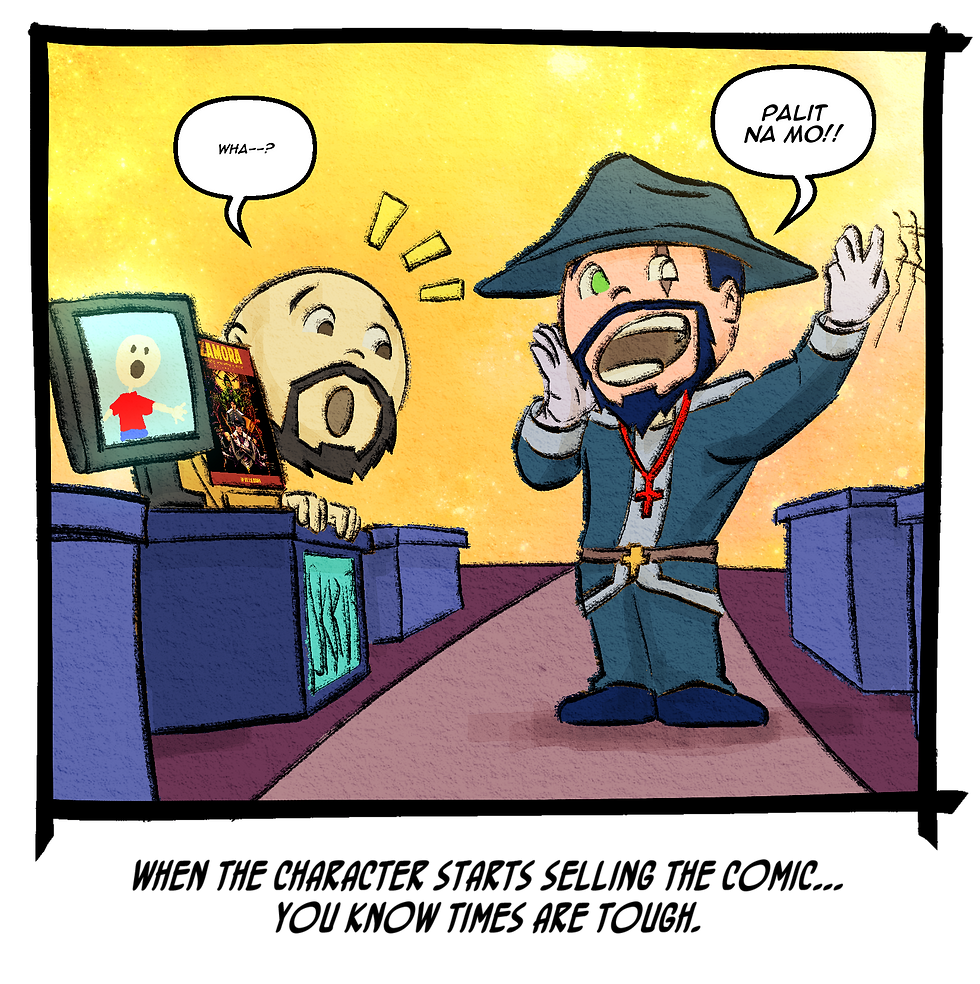
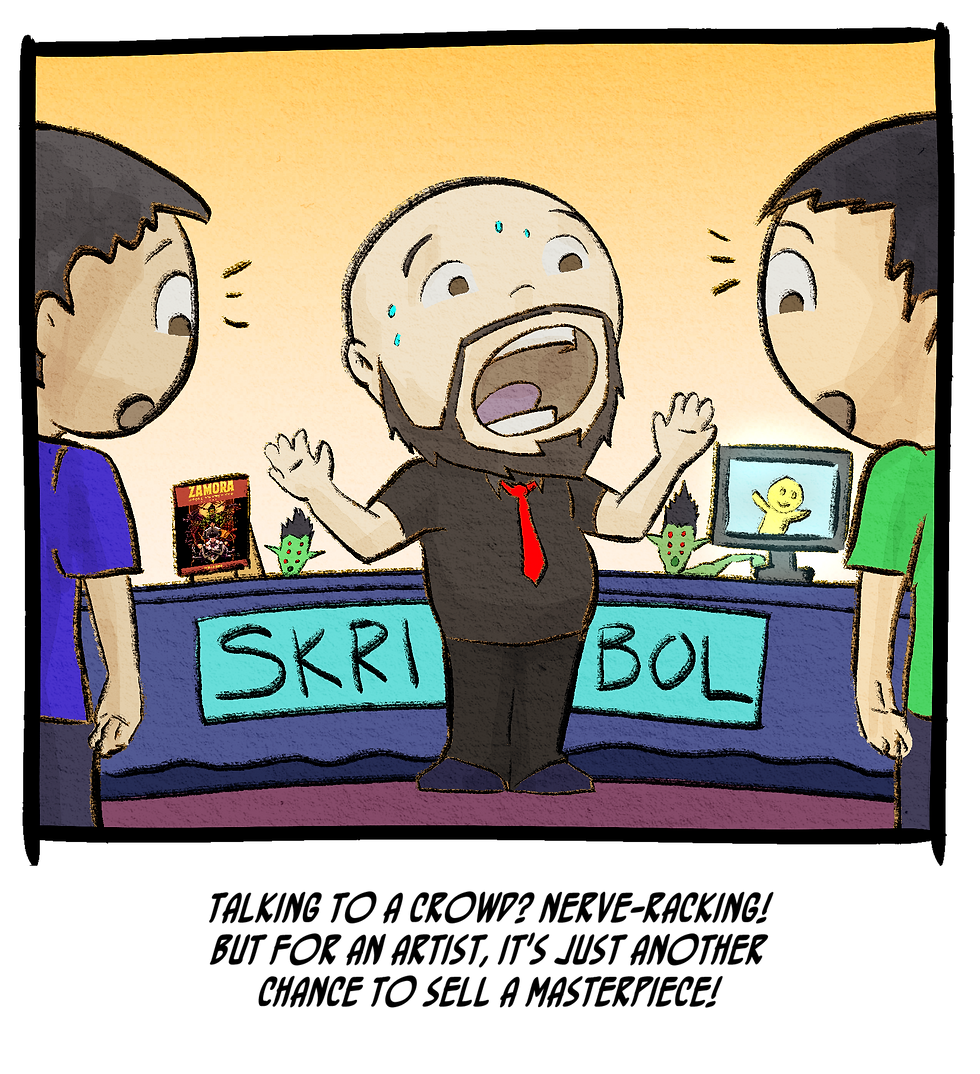
And if you're coming to Cagayanime, come find us.
I'll be at Booth M03 with the hopefully-not-too-dark-this-time Zamora Volume 1, the Lorebook, and whatever merchandise I manage to get across the finish line.
Because apparently, making the comic was only the first boss battle.
Now we have to sell it.
Subscribe to our newsletter:
Product Links:
#thescribblemedia #indiebasedstudio #animation #comics #webtoon #webcomics #services #platform #illustrationservices #computer #freelance #comicsandmanga #filipino #bisaya #bisdak #clipstudiopaint #clipstudio #clip #studio #ipadpro #tutorial #beginner #tips #videotips #newsletter #inspiration #art #creativedad #struggleofacreativedad #artistdad #artisticmomentum #creativehabits #buildingsystems #atomichabits #atomichabitsbyJamesClear



Comments