

The Comic Isn't My Biggest Product Anymore—It's the World Around It

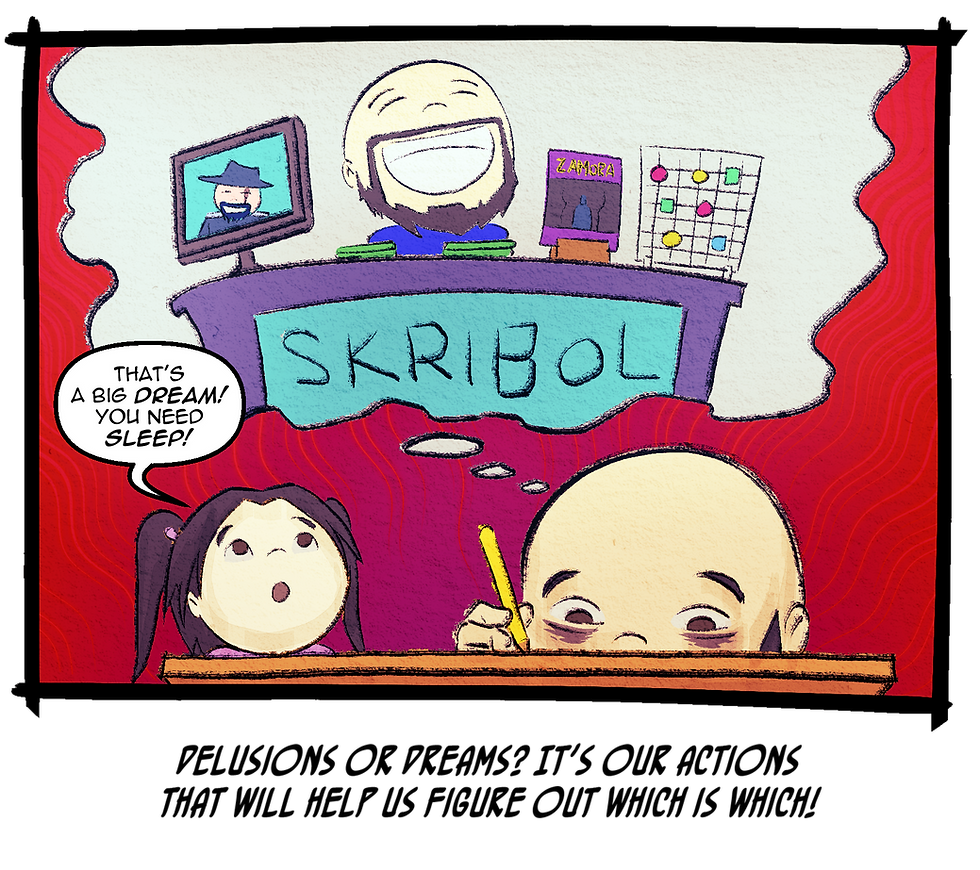
"The first product earns a sale. The world around it earns a community. Build something people can enter one small step at a time, and they'll keep coming back for the next chapter."
Introduction: Setting the Stage
As Cagayanime gets closer, my studio has become less of an art room and more of a logistics headquarters.
Every day feels like another puzzle to solve.
One hour I'm approving print quotations.
The next, I'm finalizing the dimensions of the booth.
Then I'm calling another supplier about T-shirts.
After that, I'm checking ISBN requirements.
Then I'm revising the Lorebook.
Then I'm back to budgeting.
It's funny.
Years ago, I thought finishing Zamora would be the hard part.
Now I realize...
finishing the comic was only the beginning.
If everything goes according to plan, Zamora Volume 1 finally goes to the printer next week.
Thirty copies.
That's it.
Only thirty.
Not because I don't believe in the project.
Because independent publishing teaches you something very quickly.
Optimism doesn't pay printing invoices.
Cash does.
The Deep Dive: The Problem Nobody Warns Independent Creators About
When people imagine an artist preparing for a convention, they usually picture someone drawing until the last minute.
That certainly happens.
But what they don't see is everything happening behind the scenes.
Printer negotiations.
ISBN applications.
Merchandise suppliers.
Booth layouts.
Inventory planning.
Transportation.
Pricing.
Marketing.
Risk management.
Every decision affects another.
Printing more books means fewer shirts.
Ordering more shirts means fewer stickers.
Producing sketch cards means sacrificing something else.
Every peso has to justify its existence.
Then reality adds another challenge.
The graphic novel is by far the most expensive item I'm producing.
Printing just thirty copies already consumes most of the production budget.
That means I can't depend on one product alone.
And that's where many independent creators make their biggest mistake.
Emotion Commits the Crime — Logic Does the Cover Up
Fear doesn't usually sound emotional.
It sounds practical.
"What if nobody buys it?"
"What if I print too many?"
"What if people only buy stickers?"
"What if I lose money?"
Those feel like financial questions.
But underneath them is something much deeper.
Fear of creating something nobody wants.
Fear of investing in yourself.
Fear of discovering your dream has a price tag.
I've felt every one of those emotions while preparing for this convention.
Especially because I'm still an unknown creator to most people.
There's no guarantee thirty copies will sell.
There's no guarantee the booth pays for itself.
But there's another question that's even scarier.
What happens if nobody ever gets the chance to discover Zamora because I was too afraid to print it?
The Creator Ecosystem
Preparing for Cagayanime taught me something I wish I'd understood years ago.
I call it:
The Creator Ecosystem
Most independent creators think they're selling one product.
They're not.
They're creating multiple entry points into one universe.
Some visitors will buy the graphic novel.
Others aren't ready yet.
Maybe they'll buy a sticker.
Or a shirt.
Or a sketch card.
Or the companion Lorebook.
Those aren't smaller products.
They're smaller commitments.
Every item gives someone another way to enter your world.
And that's exactly why I'm creating the Lorebook.
A 24-page black-and-white introduction to Zamora.
Early sketches.
Concept art.
Monsters.
Worldbuilding.
A quick and affordable way to meet the universe before committing to the full graphic novel.
Because sometimes...
people don't become fans after buying your biggest product.
They become fans after buying their first small one.
Small Products Build Big Worlds
One thing I've learned from local conventions is this.
Not everyone walks in planning to spend a lot of money.
Many people collect affordable items.
Stickers.
Prints.
Sketch cards.
Small souvenirs.
Instead of fighting that reality...
I'm learning to work with it.
Every affordable product becomes another invitation into Zamora.
Maybe someone buys a sticker today.
At the next convention, they buy the Lorebook.
Then they return for Volume 1.
Then Volume 2.
Creative businesses rarely grow through one giant sale.
They grow through hundreds of small relationships.
Just like Atomic Habits.
Small actions.
Repeated consistently.
Eventually, it will become something much bigger.
Five Lessons I Learned While Preparing My First Convention Booth
1. Build an Ecosystem, Not Just a Product
One comic is wonderful.
A comic, a Lorebook, stickers, shirts, and collectibles create an experience.
2. Give People Different Ways to Support You
Not everyone has the same budget.
Affordable products allow more people to become part of your community.
3. Budget Is Part of Creativity
Creative limitations don't stop great ideas.
They force better decisions.
4. Think Beyond Convention Weekend
The goal isn't simply selling books.
It's creating readers who'll still be following your work years from now.
5. Start Small
Thirty copies might sound insignificant.
But every long-running series begins with a first print run.
Momentum always starts small.
Dual Readership: For Artists and Entrepreneurs
If you're an artist...
Don't build one product.
Build a world that people can enter at different levels.
If you're an entrepreneur...
The same principle applies.
Not every customer starts with your premium offer.
Many begin with the smallest commitment.
Different industries.
Same psychology.
People invest gradually.
Trust compounds.
Before vs. After
Before
Thinking success meant selling one expensive product.
Trying to make everything perfect.
Seeing merchandise as optional.
After
Building multiple entry points.
Thinking like a publisher.
Planning for long-term readers instead of one-time buyers.
Creating a universe instead of a single comic.
Final Thought: I'm Selling More Than Comics
As I sketch booth layouts and compare production quotes, I keep reminding myself of something.
I'm not preparing for one weekend.
I'm planting the first seeds of something I hope will exist for years.
Maybe all thirty copies sell.
Maybe they don't.
Maybe someone only buys a sticker.
Maybe another person spends twenty minutes asking questions about Zamora before walking away.
Both matter.
Because every conversation expands the world.
Every reader becomes an ambassador.
Every small purchase says,
"I believe this world deserves to exist."
And for an independent creator...
that's sometimes worth even more than the sale itself.
Ask, and You Shall Receive
Let me ask you something.
If someone walked up to your booth, or your website, today...
Would they have only one way to support your work?
Or would they have multiple ways to enter your world?
Because I've learned something while preparing for Cagayanime.
People don't always buy your biggest product first.
They buy the product that makes saying "yes" the easiest.
Maybe that's a sticker.
Maybe it's a sketch card.
Maybe it's a lorebook.
And maybe...
that's the first step toward creating a lifelong fan.
Next Newsletter
I'll take you behind my Cagayanime booth and share how I'm designing the table layout, deciding where every product goes, using visual merchandising to attract attention, and the psychology behind turning a 3×7-foot booth into an invitation to explore the world of Zamora.
Subscribe to our newsletter:
Product Links:
#thescribblemedia #indiebasedstudio #animation #comics #webtoon #webcomics #services #platform #illustrationservices #computer #freelance #comicsandmanga #filipino #bisaya #bisdak #clipstudiopaint #clipstudio #clip #studio #ipadpro #tutorial #beginner #tips #videotips #newsletter #inspiration #art #creativedad #struggleofacreativedad #artistdad #artisticmomentum #creativehabits #buildingsystems #atomichabits #atomichabitsbyJamesClear


Comments