

The Day I Realized I Was Selling the Wrong Thing


"People may admire what you create, but they commit to why you created it. Products attract attention. Purpose creates believers."
Introduction — Setting the Stage
For a long time, I thought the goal was simple.
Create great art.
Post it online.
Hope people buy it.
That's what most artists are taught.
Improve your skills.
Build an audience.
Show your work.
Sell your product.
Seems logical, right?
The problem is that logic isn't what makes people care.
I learned that lesson the hard way.
For years, I built artwork for clients.
Other people's brands.
Other people's stories.
Other people's worlds.
The work paid the bills and sharpened my abilities.
But every time I posted my personal projects, I secretly hoped the artwork alone would be enough.
That people would immediately understand why it mattered.
That they would see what I saw.
Most of the time, they didn't.
Not because the work wasn't good.
Because they didn't know the story behind it.
And that realization changed everything.
The moment I stopped thinking like an artist trying to sell artwork...
And started thinking like a storyteller trying to share meaning.
The Deep Dive — Why Most Artists Struggle to Build a Real Audience
Let's be honest.
Most artists approach marketing like this:
Create art.
Post art.
Wait.
Then wonder why nobody cares.
I know because I did exactly that.
The assumption is that quality alone creates attention.
But in today's world, that's no longer enough.
People are overwhelmed with content.
AI can generate endless images.
Algorithms reward speed.
Attention spans are shrinking.
And when everything starts looking impressive...
Meaning becomes the differentiator.
That's where many artists get stuck.
Because they're trying to sell the finished piece.
What people are really buying is the story behind it.
Emotion Commits the Crime — Logic Does the Cover Up
Think about the last thing you purchased that truly mattered to you.
A book.
A piece of art.
A collectible.
A brand you support.
You didn't buy it because of logic alone.
You bought it because something emotional connected first.
Then logic showed up afterward to justify the decision.
That's human nature.
We connect emotionally.
We justify rationally.
The same thing happens with creative work.
People don't support projects because they understand every detail.
They support projects because they believe in the person creating them.
That's why storytelling matters.
That's why authenticity matters.
And that's why your personal story is often more valuable than your portfolio.
The Belief Bridge
I call this:
The Belief Bridge
The space between creating something and convincing people it matters.
Most artists focus on the product.
The Belief Bridge focuses on the reason.
People don't buy the comic first.
They buy the belief behind the comic.
They don't support the artwork first.
They support the artist's journey.
They don't follow the project.
They follow the meaning.
That realization changed how I think about Zamora.
Because Zamora isn't just a graphic novel.
It's something much deeper.
It represents years of uncertainty.
Years of watching the creative industry become increasingly unstable.
Years of questioning whether artists still have a future in a world dominated by algorithms and automation.
Years of trying to balance client work, family life, and personal dreams.
Every page carries that history.
Every creature represents a fear, frustration, or question I've wrestled with.
The monsters are fictional.
The emotions behind them are not.
Why Zamora Exists
The truth is...
I didn't create Zamora simply because I wanted to make a comic.
I created it because I needed a place to put everything I was feeling.
Fear about the future.
Frustration with corruption.
Questions about faith.
Thoughts about survival.
Concerns about what humanity is becoming.
Zamora became my way of processing those things.
A world where monsters are born from human flaws.
A world where spiritual corruption becomes physical.
A world where darkness isn't simply evil.
It's a reflection of what happens when humanity loses its way.
The comic is simply the vehicle.
The story underneath is the reason.

The Solution — Stop Selling the Product. Start Sharing the Meaning.
This was the biggest shift I had to make as an artist.
Instead of asking:
"How do I sell my comic?"
I started asking:
"How do I help people understand why I created it?"
That question changes everything.
Tip #1: Share the Struggle, Not Just the Success
People relate to honesty.
The late nights.
The setbacks.
The doubts.
The unfinished sketches.
The moments where you almost quit.
That's where trust is built.
Tip #2: Let People See Your Humanity
One of the strongest parts of my content isn't Zamora itself.
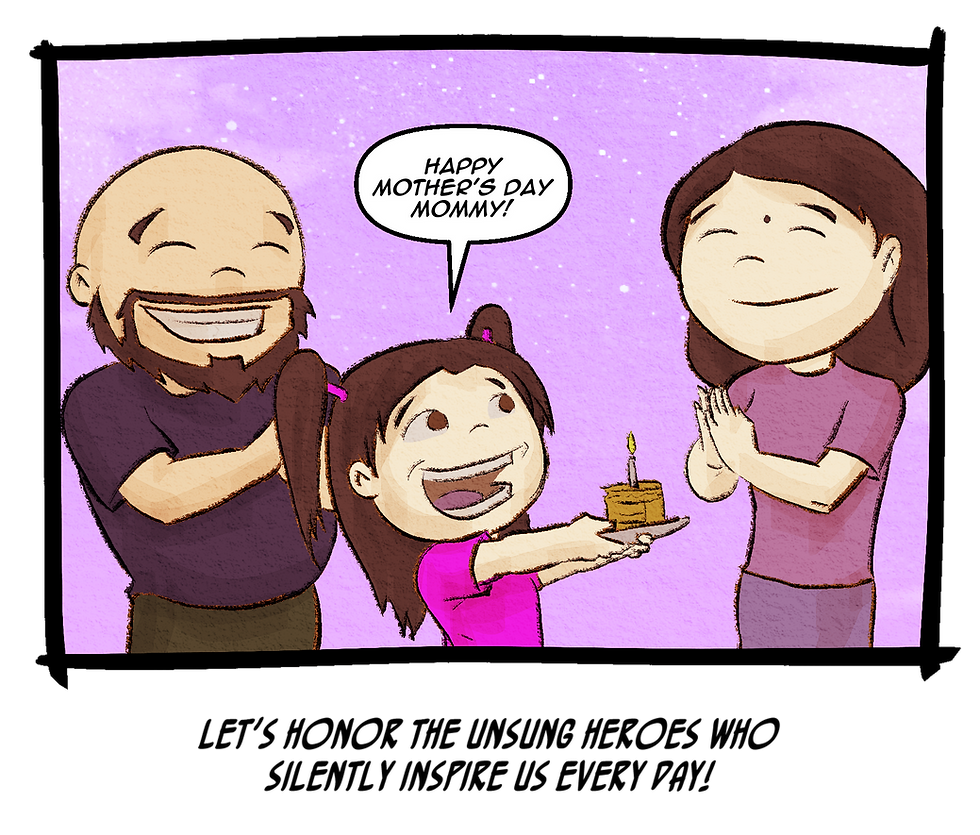
It's the moments with my daughter.
It's family.
It's life.
It's showing the person behind the artwork.
People connect with people.
Not products.
Tip #3: Build Meaning Before Monetization
Many creators try to monetize too early.
The strongest communities form around shared beliefs first.
Revenue follows trust.
Trust follows consistency.
Tip #4: Turn Your Story Into Your Competitive Advantage
AI can replicate style.
It cannot replicate your life.
Your experiences.
Your failures.
Your perspective.
Your relationships.
Your memories.
That's your moat.
That's your advantage.
Tip #5: Create Followers of the Mission, Not Just Customers
Customers buy once.
Believers stay.
Believers tell friends.
Believers become advocates.
Believers help build worlds.
That's the difference.
For Artists and Entrepreneurs
If you're an artist:
Stop thinking only about creating better work.
Start thinking about creating deeper meaning.
If you're an entrepreneur or business owner:
The principle is exactly the same.
People rarely buy products.
They buy stories.
They buy identity.
They buy belief.
Different industries.
Same psychology.
Before vs After
Before
Trying to sell artwork.
Posting without context.
Depending on visual quality alone.
Competing for attention.
After
Sharing the journey.
Building emotional connection.
Creating belief before selling.
Building community instead of chasing customers.
Why This Changes Everything
The biggest lesson I've learned building Zamora is this:
People don't follow projects.
They follow conviction.
They follow honesty.
They follow purpose.
And that's why I no longer think:
"I need to sell my comic."
Instead, I think:
"I need people to understand why this world exists."
Because once they understand that...
The comic becomes more than a product.
It becomes a shared journey.
And those are the stories people stay for.
Ask, and You Shall Receive
Let me ask you something:
What are you building right now that means more to you than money?
A project.
A business.
A story.
A dream.
A mission.
Reply and tell me.
Because the things worth building usually start as something deeply personal.
And sometimes...
That's exactly what makes them valuable.
Subscribe to our newsletter:
Product Links:
#thescribblemedia #indiebasedstudio #animation #comics #webtoon #webcomics #services #platform #illustrationservices #computer #freelance #comicsandmanga #filipino #bisaya #bisdak #clipstudiopaint #clipstudio #clip #studio #ipadpro #tutorial #beginner #tips #videotips #newsletter #inspiration #art #creativedad #struggleofacreativedad #artistdad #artisticmomentum #creativehabits #buildingsystems #atomichabits #atomichabitsbyJamesClear #zamora




Comments